
Why Car Key Signals Lose Strength Over Time
If you've noticed that you need to stand closer to your vehicle before your key fob responds, you're not imagining things. Many drivers experience gradual decreases in key fob performance over time, often long before the key stops working completely.
Modern car keys and smart key fobs rely on wireless communication to lock, unlock, and start vehicles. As key components age, signal strength can weaken, resulting in shorter operating ranges, inconsistent performance, and frustrating "key not detected" messages.
Understanding why car key signals weaken can help drivers identify problems early and avoid unexpected lockouts or starting issues.
KeyMe Locksmiths helps drivers with car key duplication, replacement, programming, and smart key solutions for many vehicle makes and models.
How Car Key Signals Work
Most modern key fobs communicate with vehicles using radio frequency (RF) signals.
When you press a button—or simply approach a push-to-start vehicle—the key and vehicle exchange information to verify authorization.
Depending on the system, the key may:
- Transmit lock and unlock commands
- Authenticate with the vehicle's immobilizer
- Communicate with proximity sensors
- Enable push-button start functions
This communication relies on both electronic components and battery power working properly.
Weak Batteries Are the Most Common Cause
The most common reason key fob signals lose strength is battery degradation.
Most smart keys use small coin-cell batteries that gradually lose power over time.
As battery voltage decreases, drivers may notice:
- Reduced operating range
- Delayed response times
- Inconsistent button operation
- Needing multiple button presses
- Intermittent vehicle recognition
"Many key fob performance issues are caused by declining battery power rather than failure of the key itself." — KeyMe Locksmiths
According to Energizer, coin-cell batteries naturally lose capacity as they age, even when not heavily used.
Internal Electronic Components Wear Down
Like any electronic device, key fobs contain components that can degrade over time.
These include:
- Circuit boards
- Antennas
- Solder connections
- Buttons and contacts
- Wireless transmitters
Years of daily use can gradually affect how efficiently the key transmits signals.
This process is usually gradual rather than sudden.
Physical Damage Can Reduce Signal Strength
Many key fobs spend years in:
- Pockets
- Purses
- Backpacks
- Cup holders
- Tool bags
Repeated drops, impacts, and pressure can damage sensitive internal components.
Even if the key appears undamaged externally, internal antennas or circuit boards may be affected.
Common causes include:
- Dropping the fob on concrete
- Sitting on the key repeatedly
- Cracked key housings
- Water exposure
Moisture & Environmental Exposure Matter
Smart keys are electronic devices, not waterproof devices.
Over time, exposure to:
- Rain
- Humidity
- Condensation
- Spilled liquids
can contribute to corrosion inside the fob.
Corrosion may affect:
- Battery contacts
- Antenna connections
- Circuit board performance
These issues can gradually weaken communication between the key and vehicle.
Interference Can Make Signals Seem Weaker
Sometimes the key isn't losing strength at all.
External interference may affect communication.
Potential sources include:
- Parking garages
- Cell towers
- Security systems
- Radio transmitters
- Large electronic installations
Drivers often notice these issues in:
- Airports
- Stadium parking lots
- Office complexes
- Dense urban environments
If the key works normally elsewhere, interference may be the cause.
Vehicle Antennas Can Also Contribute
The problem isn't always the key.
Modern vehicles contain receiver antennas that help detect authorized keys.
If a vehicle antenna or communication module develops a problem, symptoms may include:
- Reduced detection range
- Push-to-start recognition issues
- Intermittent key communication
In these cases, the key may be functioning normally while the vehicle struggles to receive the signal.
Smart Keys Use More Power Than Traditional Remote Keys
Not all key fobs consume battery power at the same rate.
Push-to-start and proximity systems often perform additional functions such as:
- Constant readiness for vehicle detection
- Two-way communication
- Encrypted authentication
- Passive entry functions
According to SAE International, modern proximity key systems require more sophisticated communication protocols than traditional remote entry systems.
This increased functionality can contribute to battery wear over time.
Why Spare Key Fobs Sometimes Stop Working Too
Many drivers assume a spare key stored in a drawer will remain ready forever.
However, spare smart keys can experience:
- Battery drain
- Component aging
- Corrosion
- Electronic degradation
Testing spare keys periodically helps ensure they're ready when needed.
"A backup key is only useful if it's tested and functioning properly." — KeyMe Locksmiths
When Should You Replace a Key Fob Battery?
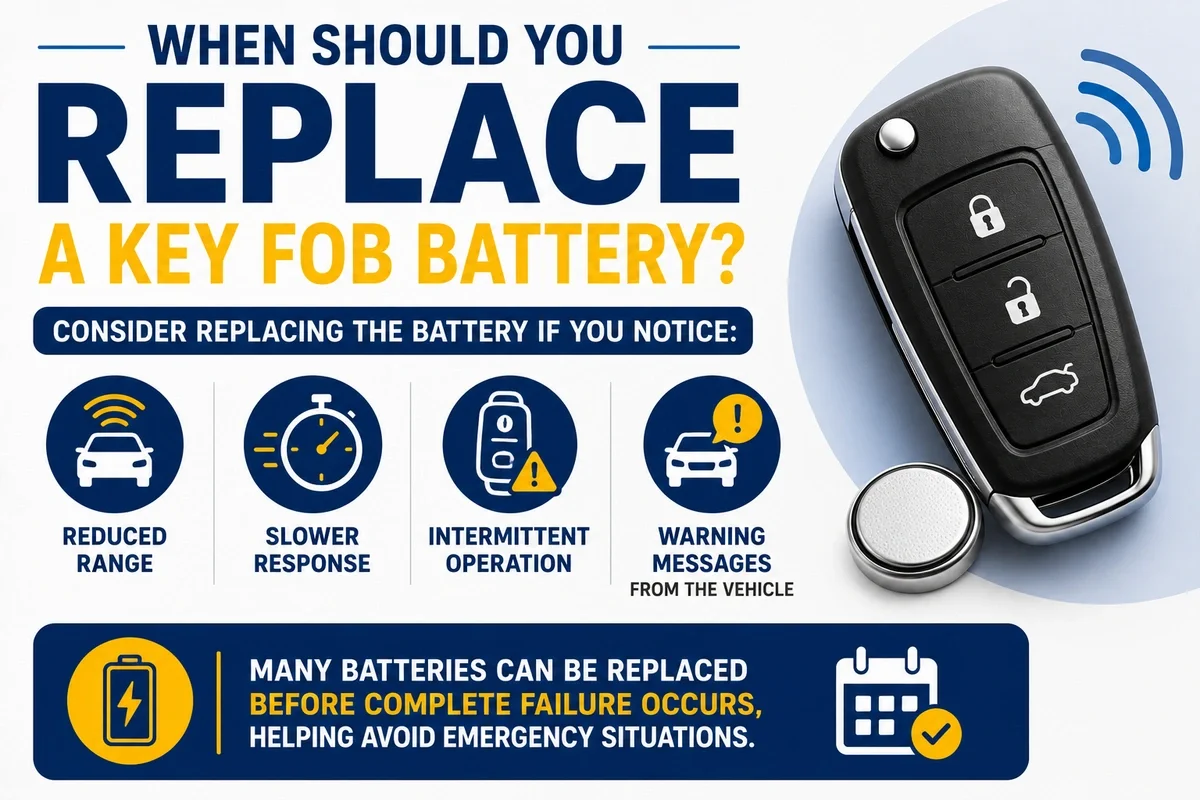
Consider replacing the battery if you notice:
- Reduced range
- Slower response
- Intermittent operation
- Warning messages from the vehicle
Many batteries can be replaced before complete failure occurs, helping avoid emergency situations.
When Is It More Than Just a Battery?
If replacing the battery doesn't solve the problem, additional issues may be involved, including:
- Internal key damage
- Programming problems
- Faulty antennas
- Vehicle communication issues
- Worn electronic components
An automotive locksmith may be able to help diagnose the cause.
How to Extend Key Fob Life
Replace Batteries Promptly
Avoid waiting until the key stops working completely.
Protect Against Moisture
Keep keys dry whenever possible.
Avoid Extreme Temperatures
Excessive heat and cold can affect battery and electronic performance.
Use a Protective Case
Cases may help reduce damage from drops and impacts.
Test Spare Keys Regularly
Periodic testing helps identify problems before an emergency occurs.
KeyMe Solutions for Backup Car Keys
One of the best ways to prepare for unexpected key problems is having a working backup.
KeyMe offers several solutions for supported vehicles, including:
- Self-service car key duplication kiosks
- Online key copy for eligible key types
- Car key vans providing in-person cutting and programming at select retail locations
Having a tested spare key can help reduce the impact of battery failures, damaged fobs, and lockouts.
Frequently Asked Questions
Does pressing key fob buttons repeatedly drain the battery faster?
Yes. Frequent use increases battery consumption, although normal daily use is generally accounted for in key fob battery design.
Can aftermarket accessories interfere with key signals?
In some cases, electronic accessories, signal-blocking pouches, or damaged key cases may affect communication range.
Why does my key work better in some locations than others?
Environmental interference from nearby electronics, buildings, or wireless systems can affect signal performance.
Can a key fob signal become stronger after a battery replacement?
If battery degradation was the cause of reduced range, replacing the battery may noticeably improve signal strength.
How often should I check my spare smart key?
Testing spare keys every few months can help ensure the battery and electronic functions remain operational.
Small Signal Changes Can Be Early Warning Signs
A shortening key fob range is often the first indication that something is changing inside the key. Whether the cause is a weakening battery, aging electronics, environmental exposure, or vehicle communication issues, addressing the problem early can help prevent more significant access and starting problems later.
Explore car key duplication, smart key replacement, and programming solutions with KeyMe Locksmiths.
References
- SAE International — Vehicle Keyless Entry & Communication Systems
https://www.sae.org/ - Energizer — Coin Cell Battery Performance Information
https://www.energizer.com/ - Consumer Reports — Key Fob & Smart Key Technology Resources
https://www.consumerreports.org/cars/
About KeyMe Locksmiths
KeyMe Locksmiths is a leading provider of local locksmith services and key copy kiosks across 50 states and the District of Columbia. Proud to serve over 5 million customers, KeyMe Locksmiths cuts over 10 million keys annually. With more than 8,000 self-service kiosks in major retailers, an e-commerce platform delivering over 10,000 keys weekly, and a nationwide locksmith network, KeyMe Locksmiths provides fast, reliable solutions for residential, commercial, and vehicle needs. KeyMe Locksmiths is committed to delivering exceptional service backed by a 100% money-back guarantee. KeyMe Locksmiths also operates one of the nation’s leading retail media networks, connecting consumers to other brands seeking to advertise in-store and delivering over 2B monthly impressions.